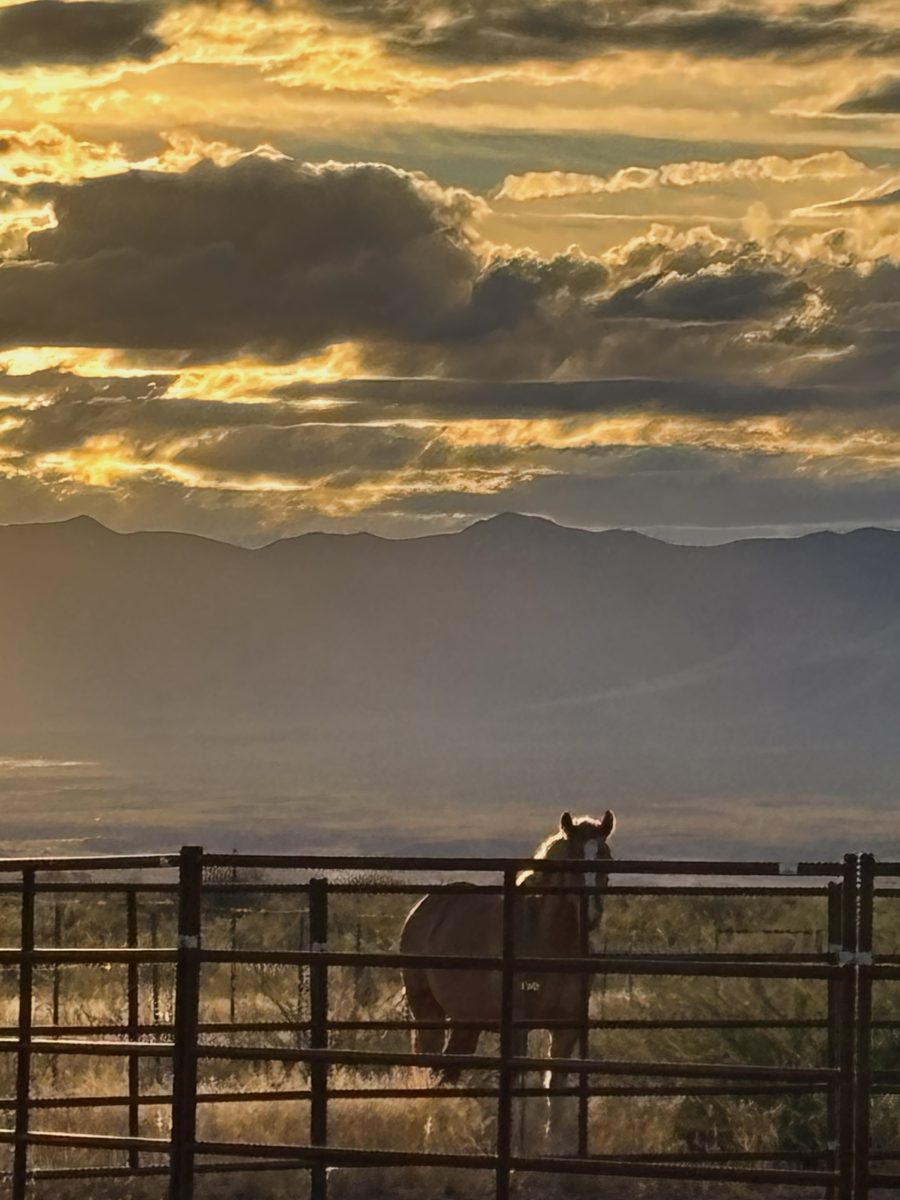
Every BLM mustang carries its history on its neck. The freezemark under the mane is an ID in an alpha-angle code, and the government keeps a full record against it — every facility, every transfer, every adoption, back to the day of capture. Our two horses are both BLM mustangs, so both came to the ranch with a paper trail.
This week that paper trail and my own research notes disagreed about Red. Running down which was right got me the story of the exact day he lost the wild.
Red
Red is a dun gelding with a blaze, born wild in 2018. The federal chip report says he came off the Coyote Lake/Alvord-Tule Springs herd area in southeast Oregon — high desert out by the Alvord playa. My notes said otherwise: he'd entered the system at a Nevada holding facility, so I'd reasoned he was a Nevada horse and guessed at four possible herd areas.
The chip report was right, and the real story is better than the guess.
In the summer of 2021, the Barren Valley country of southeast Oregon was deep in drought. Roughly 2,500 horses stood on range meant to carry fewer than 900; local ranchers were hauling water out to wild horses. That September the BLM ran an emergency helicopter gather across three herd areas — about 1,672 horses over two months. In mid-October the trap moved to Coyote Lake/Alvord-Tule Springs, and on October 19, 2021, they caught a three-year-old dun. Horses coming off that range scored 2 to 3.5 on the body-condition scale; thin to starving.
Five days later he was in Fallon, Nevada — which is where my bad guess came from. A Nevada intake doesn't make a Nevada horse. The holding corrals take horses from anywhere, and by the next spring the Oregon horses were the majority of that facility's population. He spent ten months there, a winter in Rock Springs, Wyoming, then a stretch in the training program at the Florence prison here in Arizona. Adopted in April 2023, reassigned that September. I'm his second human.
A year of steady work later — we follow the Dorrance and Ray Hunt way of doing things — he's saddle broke and solid. We're still working hard to get him out on the trail; the arena is one world and the open desert is another, and a horse that starved through a drought gather has his own opinions about leaving the safe spots. We'll get there.
His registered name is Redemption. It fits.
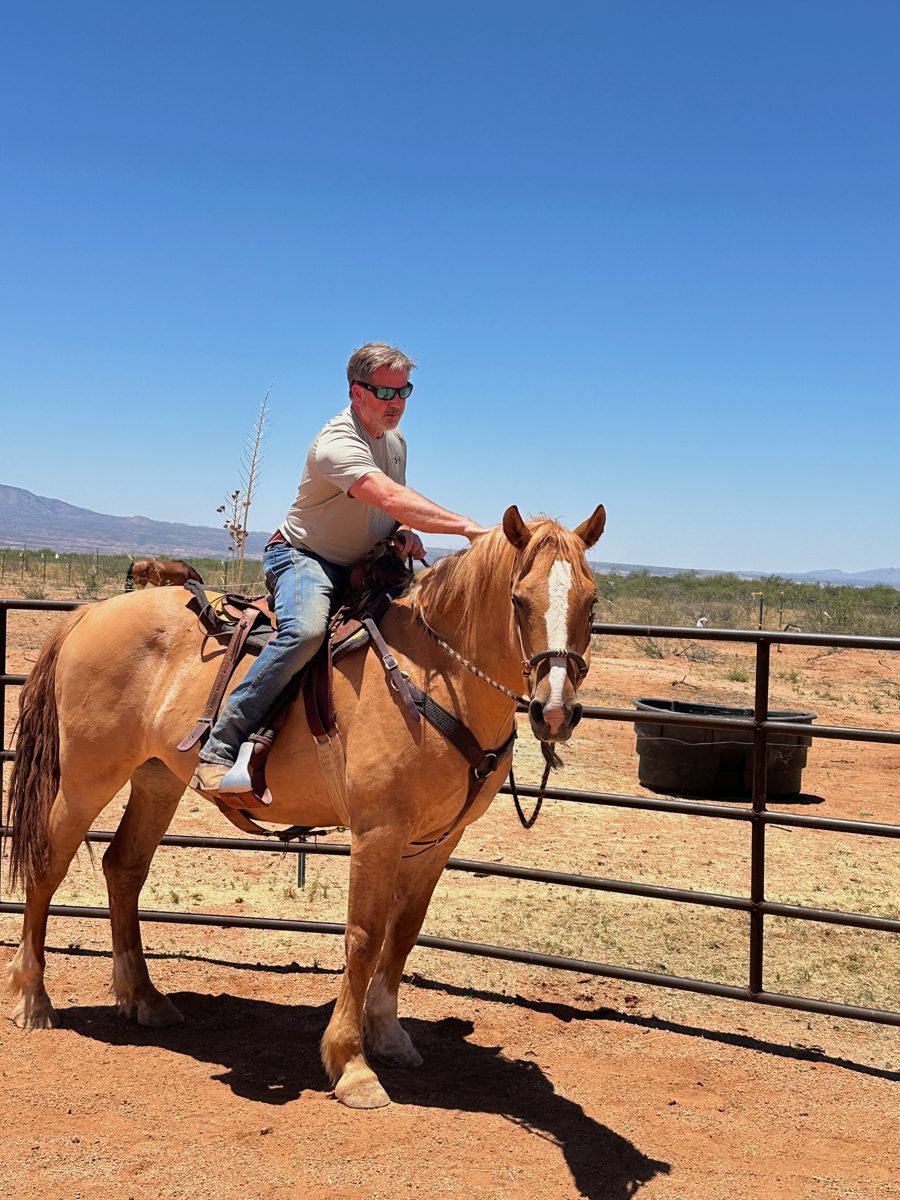
Atlas
Atlas's story runs the other direction. She was gathered in Nevada at about six months old, a foal at her mother's side; she barely lived wild at all. She spent thirteen months in the Carson City prison program as a yearling, was adopted over the internet in 2021, and came back nine months later. Then Florence, twice, with a weekend at the rodeo grounds in between; then a foster placement. When I bought her in the spring of 2023, the paperwork listed her as Untrained — four years in the system, prison-handled twice, and officially back at zero.
She wasn't at zero. She's a smart, watchful mare, and she's coming along under the same quiet handling Red got. But her record reads like what it is: a horse the system bounced, waiting for somebody to stay.
Pull the record
If you have a mustang, or you're thinking about adopting one, the BLM will hand you the whole history for free — Animal">blm.gov/report/WHBPS/145/Animal-History-by-Freeze-Mark/">Animal History by Freeze Mark or by">blm.gov/report/WHBPS/146/Animal-History-by-Chip-Number/">by chip number at reports.blm.gov. The freezemark itself decodes to a birth year and a registration number. Twenty minutes with those reports turned "our two mustangs" into two biographies.
I'll post how Atlas's training comes along.